Music is essential to our lives.
During this time of incredible upheaval, social isolation, anxiety, and uncertainty, music helps us to heal, to process, to connect with each other no matter where we are.
Whether you or your child want to make music or just let it wash over you, Sylvia creates a welcoming, warm environment to engage deeply with this fundamental part of our humanity.
Listen/Watch
Upcoming Concerts
Online 5min micro-concerts several times per week through Guts Baroque’s Patreon (join for free or donate any amount)
What’s a micro-concert? A tiny bit of live music, brought directly to you over the internet to help you start, take a pause in, or end your day with beauty and connection. Soak your feet, sip your coffee, recline in comfort while you listen.
3 May, 7:00pm | Merrill Auditorium, Portland, ME
4 May, 1:00pm | Merrill Auditorium, Portland, ME
4 May, 7:00pm | Merrill Auditorium, Portland, ME
Star Wars: A New Hope
Watch the full film with live orchestra playing the music!
9 May, 7:00pm | Woodford’s Congregational Church, Portland, ME | tickets $18–$40.50
North Star Baroque: Bach’s Coffee Cantata
North Star Baroque will close its debut season with a program that features Bach’s Coffee Cantata, a comedy from a time when coffee and coffee houses were first becoming all the rage in Europe. It tells the story of a comical dispute between a young girl who loves her coffee and her strict, blustery father who feels it isn’t proper for a girl to be drinking it. With three singers plus instruments, this little drama is the closest Bach ever came to writing an opera. The concert will also include a brilliant Vivaldi Concerto for Two Violins, as well as music of Corelli and Rameau.
PROGRAM:
Bach: Coffee Cantata
Corelli: Concerto grosso, Op. 6, No. 6
Vivaldi: Concerto grosso, Op. 3. No. 11
Rameau: Pièce de clavecin, No. 3
CANCELLED15 May, 12:15–1:00pm | Portland Conservatory of Music, Portland, ME | free
Guts Baroque: The Weimar Social Club
Imagine J.S. Bach, Telemann, and Pisendel hanging out at taverns and coffeehouses in their 20s in Weimar, trying to get their careers off the ground and trading compositional ideas. Good friends and great music!
17 May, 4:00pm | First Parish in Portland, Unitarian Universalist Church | $30 adv, $35 door
Orpheus Britannicus: Music by Henry Purcell and his contemporaries
Artistic Director James Kennerley leads the dynamic ensemble of singers and instrumentalists in Orpheus Britannicus, a celebration of Henry Purcell, the greatest English Baroque composer. Showcasing Purcell’s finest music for the opera house, the chamber, and the church, the concert will include Come, ye sons of Art, a splendid work written to celebrate the birthday for Queen Mary in 1694. Purcell’s gift for melodic simplicity is represented by the sublime Evening Hymn, while his mastery of orchestral dance forms is revealed in the suite from Abdelazar, or The Moor’s Revenge, featuring the famous rondeau later immortalized as the theme for Benjamin Britten’s Young Person’s Guide to the Orchestra. Selections from King Arthur bring the legendary British hero’s story to life, depicting his struggles to defend Britain from Saxon invaders. Highlights include the patriotic “Fairest Isle,” stirring instrumental dances, and the hauntingly beautiful passacaglia, “How happy the lover.” Similarly, scenes from The Fairy Queen, Purcell’s semi-opera inspired by A Midsummer Night’s Dream, showcase his playful side with the lighthearted Dance for the Fairies and the hilarious Scene of the Drunken Poet. Baroque strings, flutes, oboes, natural trumpets, kettle drums and keyboards provide an authentic period sound, complementing the stunning vocal soloists drawn from the ensemble. Performed by specialists in historical performance, this concert promises an unforgettable journey through Purcell’s finest works, presented in one of Portland’s most iconic venues.
18 May, 3:00pm | Church of the Covenant, Boston | $25–$65
In the Clearing: Mozart and Kenneth Fuchs
Join us for an enchanting choral experience as Coro Allegro presents Mozart’s Ave Verum Corpusand Vesperae solennes de Confessore, the renowned master’s final composition for the Salzburg Cathedral, featuring the exquisite Laudate Dominum omnes gentes. We will also be performing “In the Clearing” by Kenneth Fuchs. Commissioned 30 years ago by Coro Allegro, these settings of Robert Frost poems will amaze and enchant you. Don’t miss this gorgeous afternoon of music!
May 19–June 16 | online
Portland Symphony Orchestra: Carmina Burana & Double Piano Concertos
Digital concert tickets available May 19–June 16 here
11–15 June | Greater Portland, ME area
Portland Bach Experience
Period instrument chamber orchestra concerts and the perennial favorite Bach & Beer! Details coming soon.
12 July | The Waldo Theatre, Waldoboro, ME | $23
Guts Baroque feat. Andrus Madsen: Fantasticus!
Guts Baroque with featured guest Andrus Madsen will perform whimsical, varied, and fantastical instrumental music from the 17th-century courts of what is now Germany and Austria. Emperor Leopold I, himself a musician and composer, brought several prominent Italian musicians across the Alps to Vienna. These guests, including violin virtuoso Antonio Bertali, received good salaries and plenty of opportunities to perform, to compose, and to teach the new generation of German musicians the Stylus Fantasticus: the Italian style of purely instrumental fantasies made popular by Italian composers such as Girolamo Frescobaldi. Bertali’s student Johann Heinrich Schmelzer further developed the style, and his innovations helped spread it throughout what is now Germany, teaching and inspiring other prominent composers including Heinrich Ignaz Franz von Biber.
Girolamo Frescobaldi: Canzon Prima a canto solo, F 8.01c
Antonio Bertali: Violin Sonata 2 in d minor from Partiturbuch Ludwig
Johann Heinrich Schmelzer: Sonata Unarum Fidium 1
Heinrich Ignaz Franz von Biber: Sonata 2 from 8 Sonatas (1681)
and keyboard works by Johann Jakob Walther and Johann Jacob Froberger, who the composer and treatise author Mattheson used as an example when he defined “stylus fantasticus”
13 & 16 August | Bar Harbor, ME
Baroque Orchestra of Maine
More details coming soon!

About Sylvia
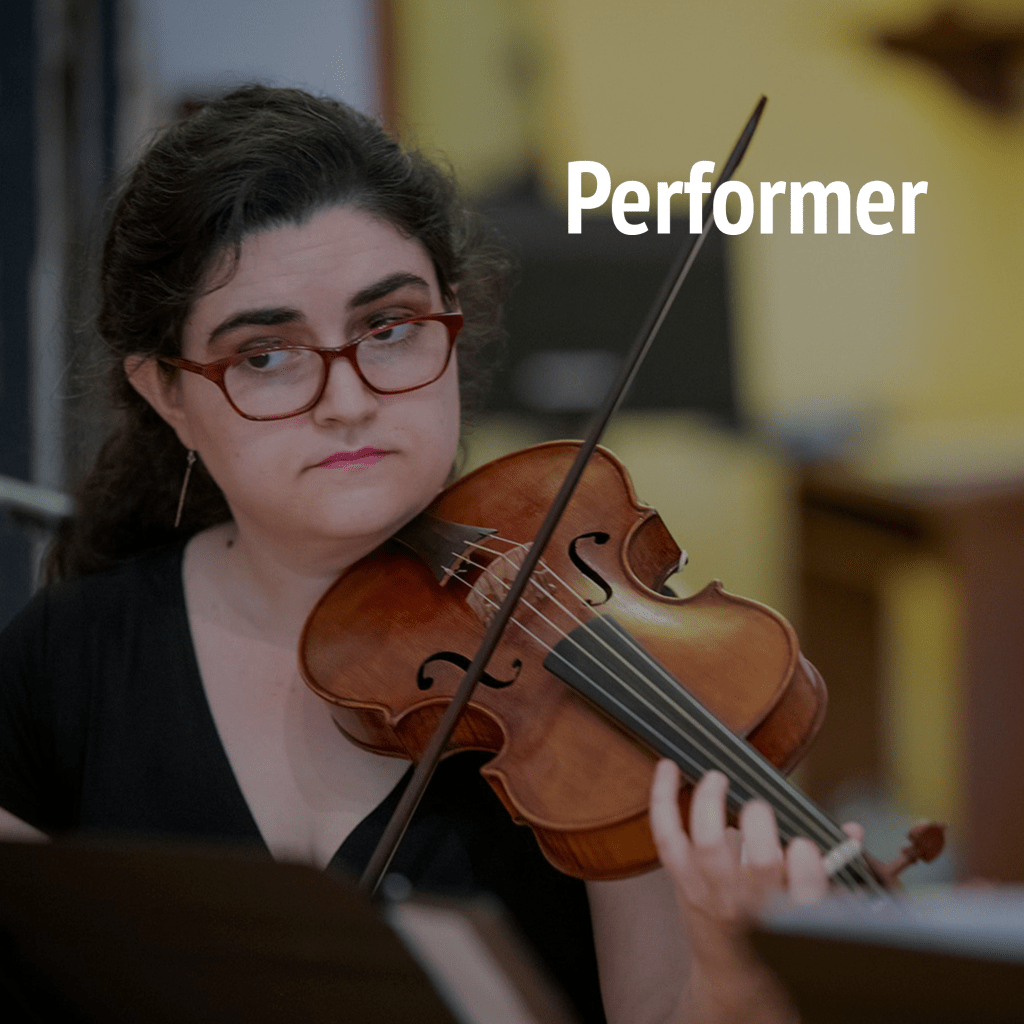
Fascinated and deeply inspired by the relationship between music, movement, and dance, violinist and Dalcrozian-in-training Sylvia Schwartz is a passionate chamber musician in both modern and historical performance practices. A native of Boston, MA, Sylvia performs currently with ensembles including Guts Baroque, Baroque Orchestra of Maine, Newton Baroque, Eudaimonia, A Purposeful Period Band, Portland Symphony Orchestra, and Portland Bach Experience/Classical Uprising. She has also played with Arcadia Players, Palaver Strings, L’Esprit Baroque, Los Angeles Baroque, Musica Angelica Baroque Orchestra, UCLA Early Music Ensemble, Harvard Baroque Chamber Orchestra, Amherst Baroque Academy Opera & Festival Orchestras, the folk/baroque band Lizzie and the Flakjackets, and the prog/alt rock bands The Mood Swings and The Fixtures. As a chamber and orchestral musician she has performed across the United States and Europe, including Shostakovich Hall in St. Petersburg, Russia, and the major halls of Boston. She has performed recitals extensively in the Boston area. She has also been a member of the Harvard Summer Chorus, Chorus pro Musica, and The Masterworks Chorale, and sees in her students as well as herself the great benefit singing has for string players.
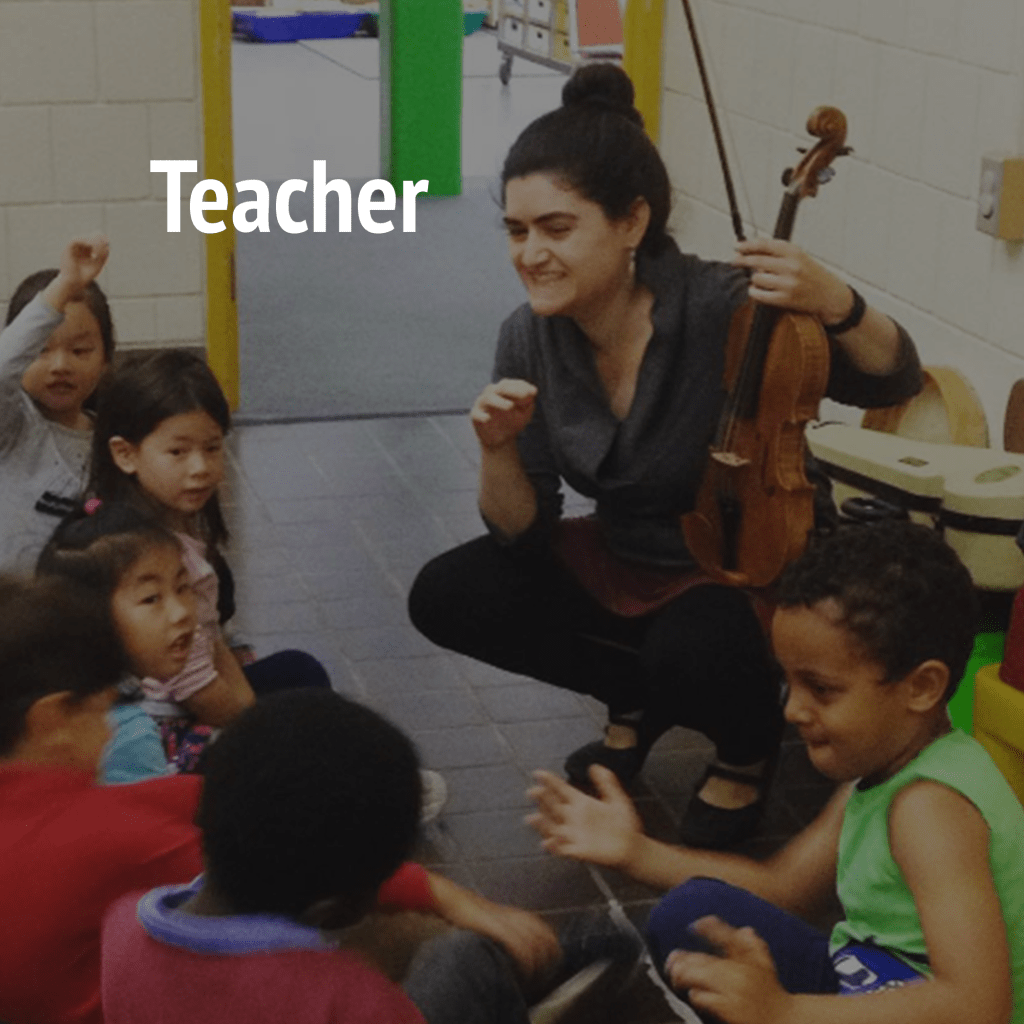
Sylvia is equally passionate about bringing music to life as a performer and nurturing creative expression and empowerment in her music students. She uses a combination of Suzuki approaches, improvisation, Dalcroze-inspired eurythmics, and Alexander Technique-inspired movement awareness to simultaneously develop fluent musicality, joy in making music, a solid instrumental technique, and musicianship (including reading and theory). A former sufferer of tendonitis, she has a particular interest in addressing and preventing performance injuries, in both beginning and experienced players.
Sylvia earned a Master of Music in Violin Performance from the Longy School of Music, where she studied with Laura Bossert and coached extensively with Dana Maiben, Na’ama Lion, Vivian Montgomery, and Ryan Turner. She is also a certified Suzuki Violin Teacher through Book 4.
Sylvia teaches in and around Portland, Maine, at Portland Conservatory of Music and Palaver Music Center.
Testimonials
I’ve had the great pleasure of both studying with and watching Sylvia teach others for several years. She’s kind, patient, and always calm, even through my last-minute requests for orchestra audition help. I think what makes Sylvia most exceptional is her creativity in lessons and adaptability to each individual student – when she sees a student struggling, she’s able to suggest new ways of looking at problems instead of just repeating herself or waiting for the issue to resolve. She often suggested completely new ways to practice passages that had previously been very challenging and that helped me immensely, and I still use many of the techniques she taught me in my violin practice to this day. She has a fantastic attitude and so many skills and tools for teaching under her belt, and she’s inspired me to more seriously pursue music education as well. I’d recommend Sylvia as a teacher to anyone – her wonderful manner and her fantastic adaptability mean that anyone could learn from and enjoy studying with her!
E.D., past student currently in university (also older sister of a young student)
She is very engaging and guides you in the right direction, but lets [you] figure whatever out [for yourself]. She also teaches you a certain perspective of learning, helping you learn quicker and understand it better.
Jonathan Y., 7th gr. student
Sylvia took the time to develop strong relationships with the students in her ensemble. Her actions showed that she cared deeply about them as people as well as their musical development. She spent time talking to students after class, communicating with colleagues and parents, and allowed for questions and comments within the classroom. Over the two years Sylvia worked for us, I observed her in several difficult situations with student behavior that she navigated gracefully. Over the time she worked with us at JQOP, Sylvia developed the important skill of being able to redirect students quickly and efficiently without derailing the momentum of class. Sylvia also showed a high level of cultural awareness, and put forth a genuine effort to make students of a variety of cultural backgrounds feel welcome and valued in her classroom.
Laura Messina, former Program Director at Josiah Quincy Orchestra Program
Sylvia and I had many conversations about string instrument pedagogy and teaching technique as feedback on her teaching that I observed, as well as out of a genuine interest on her part to learn more about her secondary instruments and managing larger groups of students. The students who benefited from her Dalcroze music and movement instruction last year are thriving this year, and are showing strong musical abilities that were most certainly nurtured through her teaching. She is a lifelong learner who is always seeking the best way to approach a challenge, and reach all the students in her class.
Join Sylvia to achieve:
- a solid technical and musical foundation for beginners
- improved technique and increased musical expressiveness for intermediate & advanced players
- support developing strong rhythm and sight-reading skills
- a sense of community with other students and parents during this time of isolation
- confidence and joy in performing
Frequently Asked Questions
How do I decide the length of a lesson?
Sylvia will consult with you about what makes the most sense for you or your child. Every student has unique needs. That being said, here are some general guidelines:
- 30-minute lessons are great for most students younger than 8 and many total beginners (any age). The ideal lesson is long enough for a student to absorb, feel success with, and understand how to practice the new material, without going so long as to get tired and discouraged. Total beginners (any age) need time for muscles to adjust to holding up the violin, so shorter lessons at least for the first few weeks can be helpful.
- 45-minute lessons are a good fit for beginner to intermediate students, and advanced students with tight schedules. Adult beginners who don’t yet read music are encouraged to take at least a 45-minute lesson to allow time for both the mechanics of healthy instrument technique and music literacy/theory. Even many young students benefit from the extra time of a 45-minute lesson once they progress beyond foundational repertoire (e.g. starting Suzuki Book 2).
- 60-minute lessons are ideal for serious students of any age who have the stamina to stay focused, and are strongly recommended for students preparing an audition or recital. Some adult beginners choose a 60-minute lesson to allow time for a deep dive each week into both instrumental technique and music literacy/theory.
What if I can’t make my lesson?
I am an actively performing musician, which is an advantage to the student’s learning, and also means occasionally I will be unavailable because of a performance. I understand that your lives are also busy and that all of us will need some flexibility in scheduling. For planned schedule changes, I will notify you well ahead of time, and ask that you do the same.
- Teacher cancellation: I will do everything I can to make up lessons that I have to cancel for my performing.
- Student cancellation due to illness/medical emergency: Taking care of health is important! Please do what you need to recover. If the student is unwell, please notify me as soon as possible. We will schedule a time for a make-up lesson once the student is recovered. If that is not possible, I will give you a credit toward the next month’s lessons.
- Student cancellation for any other reason: Please avoid scheduling events during your lesson time as much as possible. I will do my best to reschedule up to 3 planned student cancellations per semester; after that, it will be up to my discretion and availability. To be eligible for a make-up lesson, you must notify me more than 24 hours in advance. Last-minute cancellation (less than 24 hours before lesson time) will still need to pay for the missed lesson (like a doctor’s/dentist’s office or other professional appointment).
What payment do you accept?
You are welcome to use Zelle, PayPal, or Square for online payments. Mailing a personal check is also possible. Once in-person lessons resume, cash is fine as well. Fees for the month’s lessons are due at the first lesson of the month. Any allowed student or teacher cancellations not made up will be credited toward the next month’s lessons.
How do I get a violin?
In general, renting an instrument is the most flexible and affordable for beginners of any age and students needing fractional sizes. The highest-quality instrument you can access will be the best-sounding, easiest to play, and most motivating for the student to continue putting in the sometimes frustrating work of learning to play this beautiful and challenging instrument! I have experienced for myself how much a quality instrument can itself be a teacher, allowing better and more advanced technique to develop that translates “back” to a less responsive instrument. Johnson Strings in Massachusetts and Shar Music in Michigan both have good-quality rental instruments available through online/mail-order. I am currently investigating the local violin shops in Maine and what is available for quality rentals. When a student advances beyond the rental instruments available or grows to be able to play a full-size violin, purchasing an instrument and quality bow makes sense. Many shops offer trade-in credit for instruments previously purchased from them, and rental credit towards purchase. I’m happy to share more information about this when the time comes.
How much do I need to practice?
How we practice and how consistently we practice are more important than the total number of minutes per day. Your goal for daily practice time should be about the same length as your lesson. More advanced students will need more time, particularly when preparing for a performance or audition. Famous violin teacher Shinichi Suzuki said “you only have to practice on days you eat!” It is true that our lives are very busy, and still the goal is to practice every day. Daily practice gives the best enjoyment of growth and progress. It is worthwhile!
What do I need to be ready for my lesson?
Please plan to buy and have ready each time:
- Violin and bow in good repair with a protective case, appropriately sized for the student—I can help with this (fine to rent or buy)
- Soft cloth for cleaning rosin off the violin, bow, and strings
- Books (I will advise before you purchase):
- Suzuki Violin School book at the appropriate level (~$7)
- Scale book at the appropriate level (~$14, not needed right away for young beginners)
- I Know A Fox with Dirty Socks for young beginners
- Advanced students will have additional books for exercises and complete longer pieces
- Pencils for marking music
- Metronome and tuner—I recommend Korg TM-60 Combo (~$30; try Shar Music or Johnson Strings online). There are apps that do both functions, but having a dedicated tool without other distractions or that isn’t also the parent’s phone can be very helpful!
Lesson Request
I’m looking forward to being in touch with you!


 Sylvia Schwartz, Violinist